Quick answer
A pharmacy patient loyalty program works best when it rewards health actions, like a flu shot or staying adherent to medication, rather than dollars spent. This differs from a chain's generic points-for-spending model, since acquiring a new patient costs far more than retaining one. It reinforces genuine patient relationships instead of pure transactions.
A pharmacy patient loyalty program works best when it rewards health actions, like immunizations and medication adherence, rather than dollars spent. Built the wrong way, it just copies a chain's discount card, and an independent will lose that race every time, since chains can absorb thinner margins at a scale no single independent location can match. Built the right way, it rewards the behaviors that actually keep patients healthier and more connected to your pharmacy, something no chain's generic points system easily replicates.
WSPC built this guide around a simple idea: your loyalty program should reinforce the relationship advantage independents already have, not compete on the one dimension, price and points, where a national chain has the deeper pockets. Pharmacy Times has reported that one-third of all U.S. retail prescriptions are filled at roughly 22,000 independent pharmacies, all competing for the same patients a chain's discount program is designed to lock in. Done well, a loyalty program becomes a structured way of doing what good independent pharmacists already do informally: noticing and rewarding patients who take care of themselves.
Chain pharmacy loyalty programs typically work through points-based discount systems tied directly to spending, rewarding purchase volume rather than health outcomes or any genuine depth of relationship with the patient, since the model is built for scale rather than personal connection.
Pharmacy Patient Loyalty Programs: By the Numbers
Drug Topics has reported that Walgreens' Prescription Savings Club, one of the earliest large-scale examples, surpassed one million members within a few years. Members paid a flat annual fee for discounts on thousands of prescriptions and generics. The model works at chain scale precisely because it depends on volume and negotiating power an independent cannot match.
None of this is inherently wrong for a chain; it fits their business model, high volume, standardized service, and centralized purchasing power. An independent trying to replicate that model on a smaller scale is fighting on the chain's home turf instead of its own, which is exactly the trap this guide is meant to help you avoid. Independent margins are also squeezed from another direction: PBM-collected DIR fees grew more than 100,000% between 2010 and 2020, according to CMS, and just six PBMs now manage nearly 95% of all U.S. prescriptions, per the FTC. Competing purely on price in an environment already squeezed by PBM economics is a losing proposition before the loyalty program even launches.
Build loyalty on your terms, not a chain's
WSPC members get shared training and group resources built for owners solving exactly this challenge.
Become a Member →An independent should reward health actions instead of spending because it plays to a genuine strength: patient relationships and clinical trust. A chain's purchasing scale wins any pure discount competition by default.
Retention math backs this up. It is six to seven times more expensive to acquire a new patient than to keep an existing one, according to a pharmacy development veteran cited by Drug Topics. A loyalty program built around health actions is fundamentally a retention tool, not an acquisition one, which makes that cost gap directly relevant to how you should be spending your limited marketing dollars.
Think about what a spending-based points system actually communicates: buy more, get more. A health-action program communicates something different. It says we notice when you take care of yourself, and we want to help. That message aligns naturally with why patients already choose independents in the first place. It also gives your pharmacist a genuine reason to start a conversation at pickup, rather than just processing a transaction and moving to the next patient in line.
Why Retention Beats Acquisition
Retain an existing patient
Acquire a new patient
Acquiring a new patient costs 6 to 7 times more than retaining one, roughly 500 to 600% higher, according to a pharmacy development veteran cited by Drug Topics. A health-action loyalty program is a retention tool first.
| Model | What It Rewards |
|---|---|
| Chain points program | Dollars spent, purchase frequency |
| Health-action program | Vaccinations, adherence, wellness visits, MTM completion |
A pharmacy should reward health actions like flu shots, medication adherence milestones, MTM completion, and wellness check-ins, since these directly support patient health while also driving the visit frequency that builds loyalty naturally over time.
Start simple. A small reward for a completed annual flu shot, a modest recognition for six consecutive months of on-time refills, or a token acknowledgment after a completed medication therapy management review all work. None require complex tracking to start, and each ties the reward to something genuinely good for the patient rather than simply good for your revenue.
Notice that every one of these actions is something you would want a patient to do anyway, for their own health, whether or not a reward existed. That is precisely what makes this model sustainable in a way a pure discount program is not: you are not paying patients to do something arbitrary, you are recognizing behavior that already benefits them and your pharmacy's clinical mission at the same time.
A Simple Starter Reward Menu
FLU SHOT
Small reward per season
REFILL STREAK
6 months on-time refills
MTM REVIEW
Completed annual review
REFERRAL
New patient referred
A loyalty program can reinforce medication synchronization by rewarding patients specifically for staying on a sync schedule, turning an operational workflow tool into something patients notice and value rather than a back-office process they never see.
Appointment-based models and medication synchronization have been associated with improved adherence, according to the APhA Foundation, and pairing that with a visible reward closes the loop between what helps your pharmacy run efficiently and what patients actually experience. Medication nonadherence is estimated to cost the U.S. health system hundreds of billions of dollars a year, according to Annals of Internal Medicine, so a program that nudges patients toward sync is not just a marketing tactic. It is addressing a real, expensive problem at the same time.
Related: Medication synchronization is one of the easiest health actions to build directly into a rewards program. See more Medication Adherence & Sync coverage →
Rewards should be small and sustainable rather than generous and unsustainable, since a program that quietly drains margin every month will eventually get scaled back or cut, undermining the trust it was meant to build.
Roughly 90% of prescriptions dispensed in the U.S. are generic, according to the FDA, which is part of why patients are not primarily choosing a pharmacy for rock-bottom prices in the first place. A modest reward, a small store credit, a discounted OTC item, or simple public recognition, works because the point is reinforcement, not compensation. Patients are not choosing an independent pharmacy for the size of a reward; they are responding to being noticed and appreciated. Keep the cost per reward low enough that you could sustain the program for years without a second thought, since an inconsistent or short-lived program does more damage to trust than never launching one at all. A five-dollar store credit given reliably every time beats a twenty-dollar reward that gets quietly discontinued after two quarters.
No, special software is not required to run a pharmacy loyalty program, and many independents successfully track a simple version using a spreadsheet or their existing pharmacy management system before ever investing further.
Start with paper or a simple spreadsheet if that is what is realistic for your team right now. A punch card for flu shots, a note in a patient's file after a completed MTM review, or a monthly list pulled from your dispensing system to flag adherence milestones can all work without new technology. Add dedicated loyalty software later only if the manual version proves out and genuinely becomes too time-consuming to sustain by hand.
Resist the temptation to over-engineer this at the start. A program that launches simply and runs consistently beats a sophisticated system that gets built, half-implemented, and quietly abandoned six months later because it demanded more ongoing maintenance than a busy pharmacy team could realistically sustain week after week.
A pharmacy should introduce a loyalty program personally, at the counter, rather than relying only on a sign-up sheet or a small flyer that patients might easily overlook during a routine visit.
Saad Dinno, RPh, co-owner of three independent pharmacies in Massachusetts, emphasized in comments reported by Drug Topics that listening closely to patients and building on existing relationships matters more than any specific program mechanic. Applied here, that means training staff to mention the program naturally during a relevant moment, right after a flu shot, or when reviewing a new maintenance prescription, rather than treating enrollment as a separate marketing task disconnected from actual patient care.
The framing matters as much as the timing. Presenting the program as "we'd like to recognize you for staying on top of your health" lands very differently than a generic "want to join our rewards program?" The first reinforces exactly the relationship your pharmacy is already building; the second sounds like every other retail loyalty pitch a patient has already learned to tune out.
A pharmacy should avoid launching a loyalty program with too many rules, inconsistent staff communication, or rewards nobody actually wants. Any of these can quietly turn a well-intentioned program into a source of patient frustration instead of goodwill.
Complexity kills adoption fastest. If a patient needs a lengthy explanation to understand how to earn or redeem a reward, most will simply not bother. Keep the mechanic to a single sentence a staff member can explain at the counter in ten seconds. Inconsistent staff awareness is the second most common failure point. If only the owner knows the program exists, it effectively does not exist for most patients served by other team members day to day. Finally, choose rewards patients actually value. A generic branded item nobody wants defeats the purpose just as thoroughly as no reward at all.
A loyalty program fits into broader clinical service growth by acting as the visible, patient-facing layer on top of clinical work you may already be pursuing through value-based networks, giving patients a reason to notice services they might otherwise overlook.
Clinically integrated networks such as CPESN connect community pharmacies to value-based and payer programs, according to CPESN USA, and many of the same actions your loyalty program rewards, MTM completion, wellness reviews, immunizations, are exactly the services those networks recognize and reimburse. A loyalty program does not replace that clinical infrastructure. It makes the patient-facing side of it visible and appreciated, rather than something that happens quietly behind the counter with no acknowledgment.
Related: The clinical actions worth rewarding today are often the same ones value-based networks already recognize. Explore Clinical & Value-Based Care coverage →
A pharmacy can tell if a loyalty program is working by tracking enrollment, repeat visit frequency among enrolled patients, and completion rates for the specific health actions being rewarded, not just overall sales.
Compare enrolled patients against similar non-enrolled patients over two or three quarters. If enrolled patients show meaningfully better adherence, higher visit frequency, or more completed wellness services, the program is doing its job, even if it never shows up as a dramatic one-month sales spike. Loyalty, almost by definition, is a slow-building metric.
It also helps to ask enrolled patients directly what they think of the program every so often. A quick, informal question at pickup, "how's the program working for you?", often surfaces useful feedback faster than any spreadsheet will, and shows patients the program is a genuine relationship, not a set-and-forget marketing gimmick.
| Metric | What to Compare |
|---|---|
| Adherence | Enrolled vs. non-enrolled refill consistency over 2 to 3 quarters |
| Visit frequency | Enrolled vs. non-enrolled pharmacy visits per quarter |
| Service completion | Enrolled vs. non-enrolled completed wellness or MTM services |
You're not building this alone
WSPC members get shared training, group purchasing power, and a network of independent owners solving these same challenges.
Become a Member →A pharmacy patient loyalty program does not need to be complicated or expensive to be effective. Start with one or two health actions worth rewarding, track it simply, and introduce it personally rather than through a sign-up sheet alone. Built this way, the program reinforces exactly the relationship advantage that already brings patients to an independent pharmacy in the first place, and it costs a fraction of what a chain spends chasing the same loyalty through discounts alone.
This article is general educational information for independent pharmacy owners and operators and is not legal, financial, tax, or regulatory advice. Verify current requirements and consult qualified professionals before acting. WSPC provides resources and advocacy for independent community pharmacies.
Ready to grow your pharmacy with the right support behind you?
WSPC members get group purchasing power, shared training resources, and an active advocacy voice for independent pharmacy.
Become a Member →Have questions about growing your pharmacy?
Contact WSPC →Sources
Written by
WSPC
Independent Pharmacy Cooperative · WSPC
WSPC is a member-owned cooperative that helps independent community pharmacies lower their cost of goods, grow revenue, and stay competitive through group purchasing, business analytics, clinical programs, and advocacy.
Was this article helpful?
A pharmacy patient loyalty program is a structured way of recognizing and rewarding patients for their continued business, ranging from simple discount cards to programs tied to health actions like vaccinations or adherence.
No. Chain loyalty programs are typically built around spending and points, which independents cannot match at scale. A health-action-based program plays to an independent's relationship strength instead of competing on discounts.
Health actions include getting a flu shot, completing a medication therapy management review, maintaining strong adherence to a maintenance medication, or attending a wellness check-in, rather than simply spending money in the store.
No. Many independent pharmacies run effective loyalty programs with a simple spreadsheet or their existing pharmacy management system before ever investing in dedicated loyalty software.
Introduce it personally at the counter rather than relying on a sign-up sheet alone. Patients respond better to a pharmacist explaining the benefit directly than to a self-service form they might overlook.
Yes. Tying rewards to adherence milestones, like consistent on-time refills, gives patients an additional incentive to stay on their medication schedule, which benefits both their health and the pharmacy's business.
Yes. Rewarding patients for staying on a sync schedule turns an operational tool into a visible perk. Sync is associated with improved adherence, according to the APhA Foundation, addressing a problem that costs the health system hundreds of billions a year.
Many actions a loyalty program rewards, like MTM completion and wellness reviews, are the same services CPESN and other value-based networks recognize and reimburse, according to CPESN USA, making the reward program a visible layer on top of that clinical work.
Acquiring a new patient costs 6 to 7 times more than retaining an existing one, according to a pharmacy development veteran cited by Drug Topics, making a health-action loyalty program a retention tool first.

Pharmacy vaccine marketing turns immunization clinics into a genuine patient acquisition engine, not just a seasonal service, for independent owners.
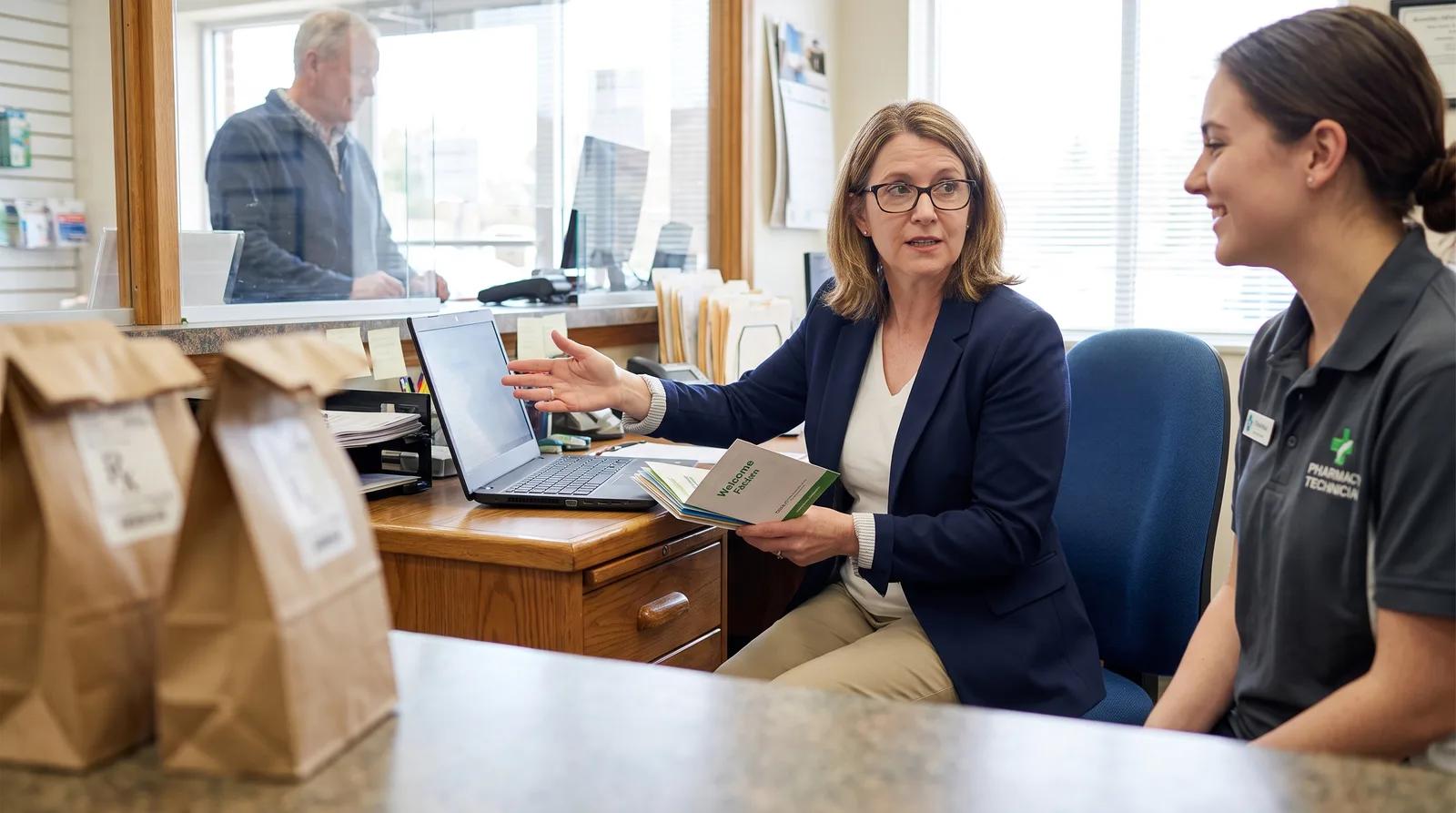
Pharmacy online reviews shape whether a new patient chooses your pharmacy or a competitor. Here is how to earn more reviews and respond well to every one.
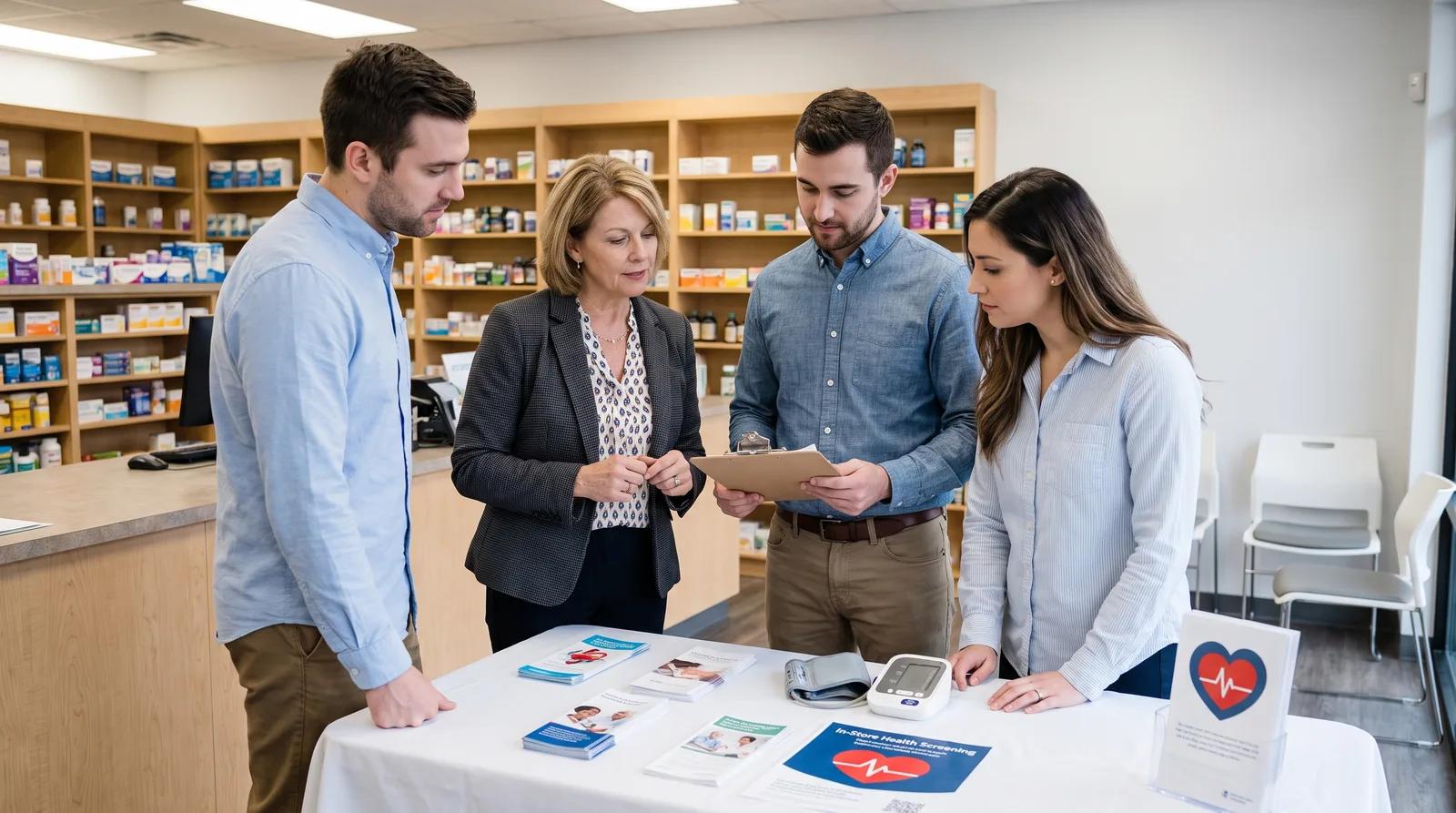
Pharmacy health screening events help independents brand themselves as a healthcare destination while driving real foot traffic and new patients.
WSPC gives you the buying power, the contracts, and the people to protect it.