Quick answer
Pharmacy automation pays off for independents when it frees enough technician time to cut labor costs or support new revenue. Most stores start with a counting device or adherence packager before considering a full vial-filling robot. Measure hours saved against total lease, service, and software costs to judge the real payback period.
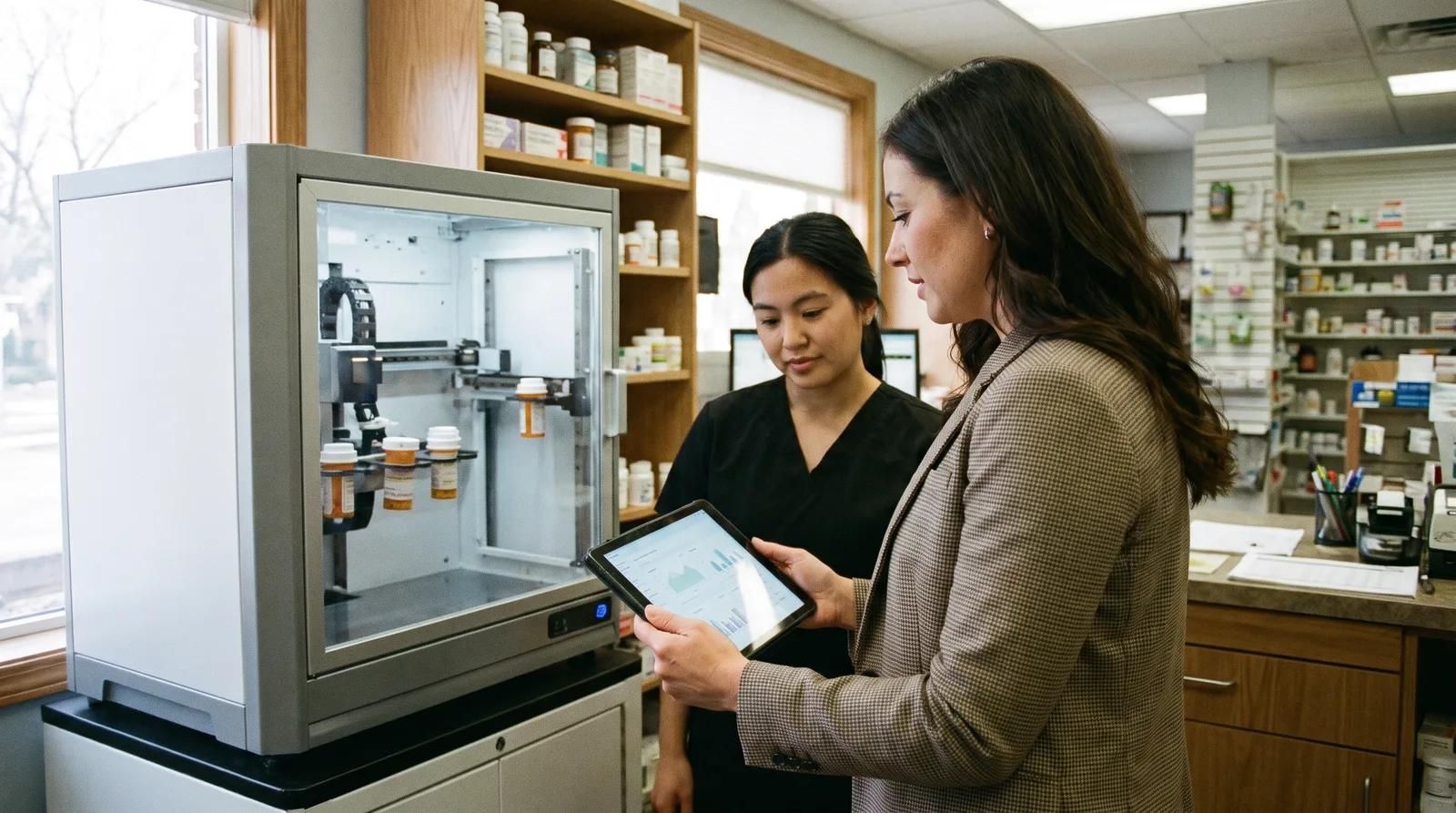
Pharmacy automation pays off for an independent store when it frees staff time you actually put to work. It used to sound like something only chains could afford. That's changed. Counting machines, vial-filling robots, and adherence packaging systems now come in sizes built for a single independent store, and many owners pay for them through the group buying power of a member-owned cooperative rather than going it alone.
But a machine on the floor isn't the same as a machine that pays for itself. Some owners free up a full technician shift. Others end up with an expensive robot that sits half idle because the workflow around it never changed.
This guide covers what each type of equipment does, how to tell whether your store is ready, and how to run the payback math on your own numbers before you sign anything.
Buy technology the way you buy drugs: as a group
WSPC members share purchasing power, pay no membership fees, and compare notes with owners who have already installed the same equipment.
Become a Member →Pharmacy automation is any equipment or software that takes repetitive dispensing work off your staff, such as counting, filling, packaging, labeling, or tracking prescriptions. For independents, it usually means a counting device, a vial-filling robot, an adherence packaging machine, or a will-call system.
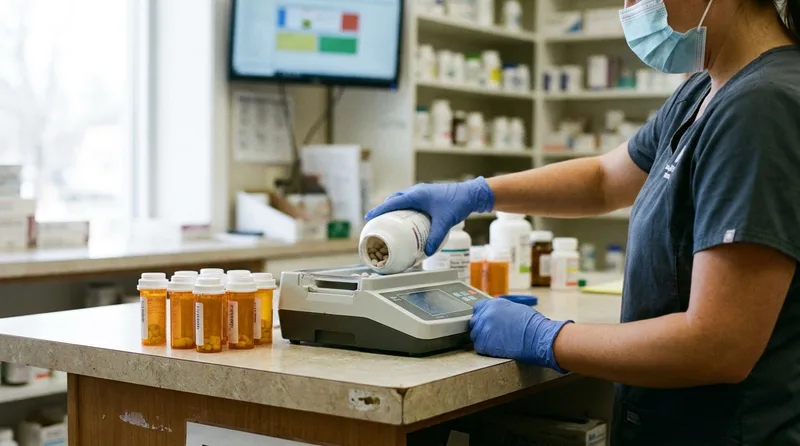
The categories differ a lot in cost, footprint, and what problem they solve. A counting device helps every fill a little. A packaging machine helps one service a lot. Knowing which problem you have comes first.
Automate the task that eats the most staff time with the least judgment involved. For most independents, that's high-volume counting of fast-moving generics. If you run a growing med sync or long-term care business, adherence packaging may come first instead, because hand-packing multi-dose cards is slow work.
Generics drive this decision. According to the FDA, generic drugs account for roughly 9 out of 10 prescriptions (about 90%) dispensed in the United States. A small group of fast-moving generics often makes up a large share of your daily counts, and that's exactly the volume a robot handles well.
| Equipment | Best for | Relative cost | Floor space |
|---|---|---|---|
| Counting device | Every store, any volume | Lowest | Fits on the counter |
| Adherence packager | Med sync, LTC, multi-dose patients | Moderate to high | Dedicated workstation |
| Vial-filling robot | High daily volume of fast-moving generics | Highest | Large footprint |
| Will-call system | Busy pickup counters | Low to moderate | Minimal |
Run a quick test. Pull your dispensing report for the last 90 days and sort by fill count. If your top 150 to 200 drugs make up most of your fills, a robot has something to work with. If your volume is spread thin across many drugs, a counting device may give you most of the benefit at a fraction of the cost.
Your pharmacy is ready for automation when steady volume, staffing strain, and available space all line up. If technicians spend most of their day counting, overtime keeps climbing, and you have room for equipment, the case is strong. If only one of those is true, wait.
Readiness is less about prescription count than about where your hours go. A store filling 300 scripts a day with a well-staffed team may not need a robot yet. A store filling 180 a day with one technician out on leave might.
Four or more yes answers usually means it's worth getting quotes. Fewer than that, and a counting device or workflow changes may be the smarter first step.
Calculate payback by dividing the total cost of the equipment by the monthly value it creates. That value comes from technician hours you no longer pay for, fewer dispensing errors, and new revenue from services the freed time allows. The shorter the payback period, the stronger the purchase.

Here's a hypothetical example, so swap in your own figures. Say a robot frees 20 technician hours a week. At $22 an hour, that's about $1,900 a month in labor you can redeploy or avoid. Add the margin from 30 new adherence packaging patients your team now has time to serve. Then compare that monthly total with your lease payment, service contract, and supplies.
Be careful with step three. A robot that frees time nobody uses doesn't save money. It just makes the afternoon quieter.
Compare notes before you sign a quote
Talk with owners who run the same equipment, and see which technology vendors are available through member supplier programs.
Become a Member →Most independents lease or finance pharmacy automation, because it keeps cash free for inventory and payroll. Buying outright costs less over the equipment's life but ties up capital. Leasing usually costs more in total yet often bundles service and makes upgrading easier when the technology changes.
Which makes sense depends on your cash position and how long you plan to keep the equipment. If you expect to sell the store within a few years, ask how a lease transfers to a buyer. Many owners forget that question until closing.
| Option | Main advantage | Main drawback |
|---|---|---|
| Buy outright | Lowest total cost, no monthly payment | Large upfront cash outlay |
| Equipment lease | Predictable payment, service often included | Higher total cost over the term |
| Bank or vendor financing | You own it at the end | Interest cost and a loan on your books |
Whatever you choose, read the service contract closely. Response time matters. A robot that's down for three days during flu season costs more than any discount you negotiated. Ask your accountant how each option affects taxes and depreciation before you decide.
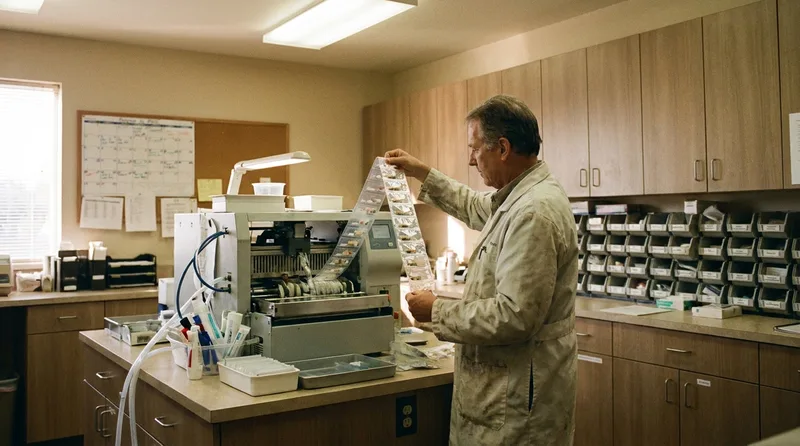
Automation makes med sync and adherence packaging scalable. Hand-packing multi-dose cards limits how many patients you can serve, while a packaging machine lets the same team handle far more. That matters because synchronized patients refill more consistently, which steadies your volume and ordering.
The clinical case is well documented. The APhA Foundation has linked appointment-based models and medication synchronization with improved adherence. Research published in the Annals of Internal Medicine also estimates that medication nonadherence costs the U.S. health care system hundreds of billions of dollars a year.
For your store, that translates into predictable work. You know which patients pick up when, so a packager can run batches on a fixed schedule instead of in a rush. Long-term care facilities, assisted living, and home health patients often prefer multi-dose packaging too, which opens new accounts. Start by sizing demand: count patients already on four or more chronic medications. That list is your packaging pipeline.
The most common mistake is buying equipment before redesigning the workflow around it. Other frequent problems include choosing a machine sized for hoped-for volume, underestimating staff training time, and skipping software integration checks. Each one stretches the payback period, sometimes by years.
Visit a store running the same setup before you buy. Watch a busy hour, not a demo. Owners are usually happy to show you what works and what they'd change.
A buying group can help by giving you access to negotiated vendor programs and a network of owners who have already installed the equipment. Group terms may lower your purchase or lease cost, and peer feedback helps you avoid systems that look good in a demo but struggle in a busy store.
Independents share the same problem: one store has little bargaining power on its own. According to NCPA, there are roughly 19,000 independent community pharmacies in the United States, about one-third (roughly 33%) of retail pharmacy locations. Pooled, that's real volume.
Start by reviewing the supplier and partner programs your group offers, then ask which members run the equipment on your shortlist. Benchmarks help too. Comparing your staffing and margins with the NCPA Digest shows whether labor is really your biggest cost problem before you spend on a fix.
Start with the smallest purchase that solves your biggest time drain. For many stores, that's a counting device or an adherence packager, not a full robot. Measure the hours it saves for three months, then use that real data to decide whether a larger investment makes sense.
Pharmacy automation pays off when it buys back your team's time and you put that time to work. Your next step is simple: time a week of counting and packaging, then run the payback math above. Our member resources library covers related topics in operations and staffing.
This article is general educational information for independent pharmacy owners and operators and is not legal, financial, tax, or regulatory advice. Verify current requirements and consult qualified professionals before acting. WSPC provides resources and advocacy for independent community pharmacies.
Invest in technology with independent pharmacies behind you
Join owners who share buying power, supplier programs, and practical experience, with no membership fees.
Become a Member →Weighing an automation quote right now? Talk it through with our team.
Call 844-977-2498 →Sources
Written by
WSPC
Independent Pharmacy Cooperative · WSPC
WSPC is a member-owned cooperative that helps independent community pharmacies lower their cost of goods, grow revenue, and stay competitive through group purchasing, business analytics, clinical programs, and advocacy.
Was this article helpful?
Pharmacy automation costs range widely, from countertop counting devices to large vial-filling robots that cost many times more. Total cost also includes installation, software interface fees, service contracts, and consumables, so request a full quote covering all of them before comparing options.
It can be, if the equipment matches your actual workload. Small stores often get the best return from a counting device or adherence packager rather than a full robot. Time your counting and packaging work first, then compare the value of those hours with the equipment cost.
Usually not. A robot takes over repetitive counting and filling, which frees technicians for patient service, insurance problems, med sync calls, and clinical support. Most owners redeploy that time rather than cut staff, especially during ongoing technician shortages.
A counting device speeds up and checks manual counts but still needs a person for each fill. A vial-filling robot stores fast-moving drugs and counts, fills, labels, and caps vials on its own. Robots need more space and volume to justify their cost.
Installation itself often takes days, but the full transition usually takes several weeks. Expect time for software interface setup, cell calibration, staff training, and a slower learning period. Planning the workflow before installation day shortens that adjustment considerably.
It can reduce errors tied to counting and labeling, because barcode checks and calibrated cells catch wrong drugs and miscounts. Pharmacists still verify prescriptions, so automation supports accuracy rather than replacing professional judgment.

Learn where independent pharmacy profit margins go and how to win them back through purchasing, inventory, cash pay, clinical services, and adherence.

Medication synchronization pharmacy programs improve adherence and revenue by aligning refills to one monthly visit, backed by NCPA-documented results.

DIR fees explained in plain language: what they are, where they came from, and how the 2024 rule change affected independent pharmacy reimbursement.
WSPC gives you the buying power, the contracts, and the people to protect it.