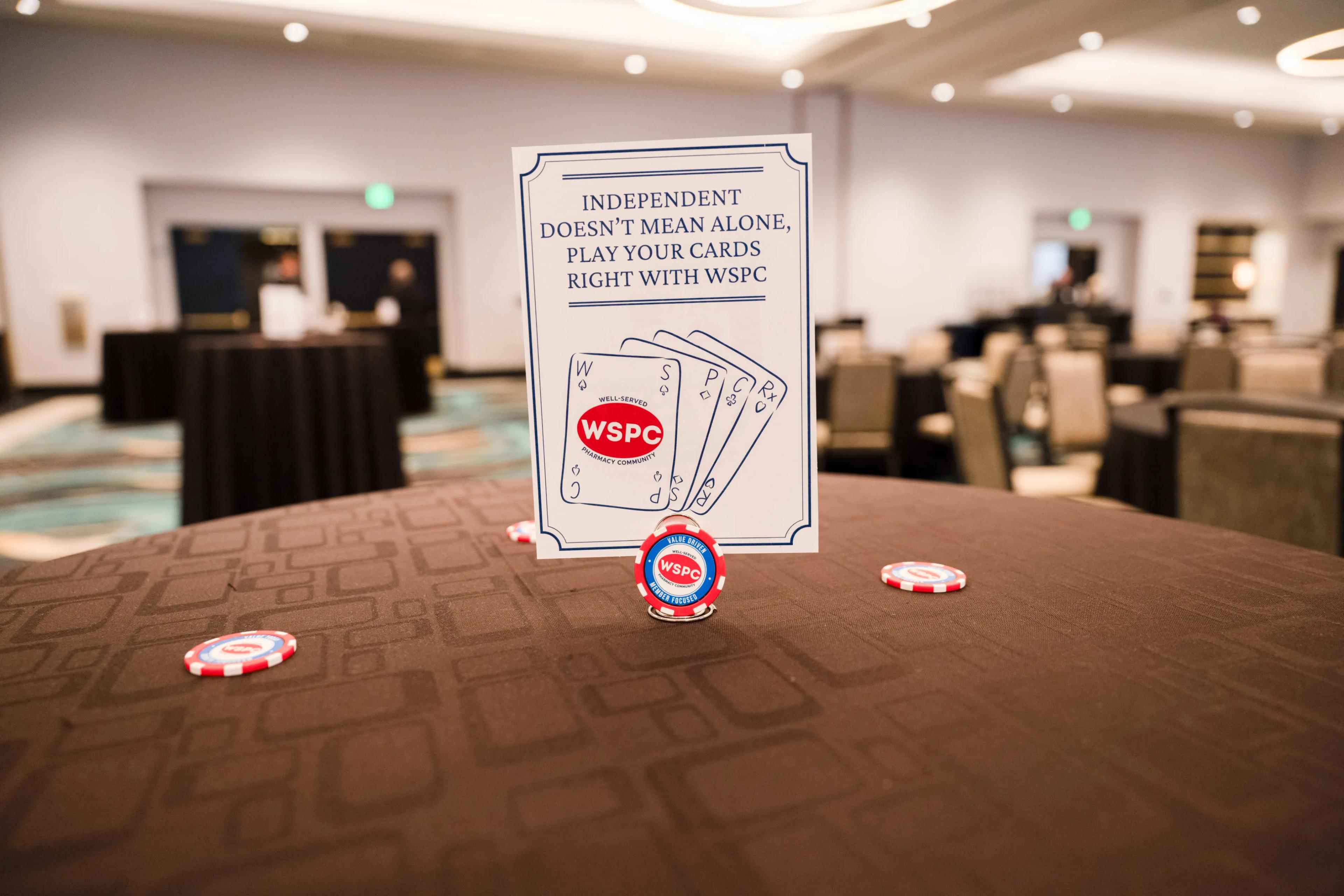
Quick answer
Independent pharmacy marketing ideas that work on a small budget include improving curb appeal, using referral cards, welcoming new residents personally, and getting involved in local community events. None of these require an agency. They rely on consistency and genuine relationships rather than ad spend.
Independent pharmacy marketing ideas that actually work do not need an agency retainer. Some of the most effective tactics in the industry cost little beyond staff time, and they have been proven in real pharmacies for years, not dreamed up by a marketing consultant trying to sell a package.
The direct answer: these tactics work by turning a pharmacy's existing local relationships and visibility into acquisition tools, not by trying to match a chain's ad budget dollar for dollar.
WSPC pulled this list from tactics Drug Topics has documented working in real independent pharmacies across the country. Nearly 19,000 independent pharmacies, employing more than 200,000 people nationwide according to Pharmacy Times' coverage of NCPA's 2024 convention, compete against chains every day, and most of them cannot outspend a national ad budget. What they can do is out-relationship the competition, and that is exactly what these tactics rely on. None of them require a marketing degree, a big check, or an outside agency, just a bit of consistency and someone on staff willing to own the effort.
Independent pharmacy marketing ideas need to be different from chain tactics because independents cannot compete on ad spend, but they can compete on personal relationships and local visibility a national brand cannot replicate at the neighborhood level.
A chain pharmacy's marketing budget dwarfs almost any independent's, but that budget buys generic reach, not a genuine relationship with a specific patient down the street. The tactics below lean into that advantage instead of trying to out-advertise a competitor with a much bigger checkbook.
That distinction matters more than it sounds. A chain can run the same television ad in a hundred cities at once. It cannot personally remember that a specific patient's daughter just started college, or notice that a regular customer missed their usual refill window. Those small, human details are where an independent consistently wins, and none of them show up on a media buy invoice. The tactics that follow are built around making that advantage visible and repeatable, not just something that happens by accident when a good pharmacist has a good day.
Related: Front-end merchandising and presentation are some of the fastest, lowest-cost wins available to an independent pharmacy. Explore Front-End & Retail Strategy →
Most independent pharmacies should plan to spend roughly 7 to 8% of gross revenue on marketing, not zero and not a chain-sized ad budget, according to guidance from PBA Health. That is enough to fund the low-cost tactics in this guide consistently, without competing dollar-for-dollar against a national campaign.
PBA Health notes that more than 85% of adults still prefer filling prescriptions at a local pharmacy over mail order. These tactics reinforce that preference; they do not need to create it from scratch. A defined, modest monthly budget consistently outperforms an undefined budget of zero.
For context, PBA Health notes the average small business allocates closer to 11% of revenue to marketing. Pharmacy's lower 7-8% benchmark reflects how much of this guide's approach costs staff time rather than ad spend.
| Tactic | Typical Cost | Time to See Results |
|---|---|---|
| Curb appeal and signage | Low, mostly maintenance | Immediate, ongoing |
| Referral card program | Low, cost of rewards only | A few weeks |
| New-resident mailing | Low to moderate | 1 to 3 months |
| Community sponsorship | Low to moderate | 3 to 6 months |
| Google Business Profile upkeep | Free, just staff time | 4 to 8 weeks |
WSPC's shared member resources include ready-to-use templates for several of these tactics. No one has to build a referral card or a welcome letter from a blank page.
Curb appeal matters more than most owners assume, since a well-maintained storefront is often the very first impression a potential patient forms, before they ever step inside or read a single review.
Drug Topics has documented real examples of this working: a historic Utah pharmacy turned a hand-carved, colorfully painted sign into a local landmark and conversation starter, while another pharmacy that relocated to a busy street installed a digital sign with rotating messages to pull in new customers trying its services. Neither required a large budget, just attention to an asset the pharmacy already had.
The investment here is usually maintenance, not construction. A fresh coat of paint on trim, a repaired sign light, or simply clearing clutter from a storefront window can shift how a building reads to someone driving by at thirty miles an hour, which is the only impression most passersby ever get.
Yes, referral programs bring in new patients reliably when they are simple and rewarding for both people involved, since patients trust a friend's recommendation far more than any advertisement your pharmacy could run. A printed referral card, split into a giver's section and a new patient's section, remains one of the most cost-effective tactics available.
The mechanics matter more than the concept. The most effective programs do not require the new patient to bring in a prescription immediately; they reward simply presenting the card. The referring patient gets a small thank-you, often a gift certificate, and the new patient gets a warm welcome and a reason to transfer their prescriptions over. Done consistently, this becomes a quiet, ongoing acquisition channel that costs a fraction of paid advertising.
| Referral Type | Typical Reward |
|---|---|
| Patient-to-patient | Small gift certificate for both the referrer and new patient |
| Employee referral | Modest cash reward to staff, tracked like a coupon |
Track redemptions the same way you would track a coupon, since the data tells you which staff members and which patients are naturally driving word of mouth. That insight alone is often worth more than the modest cost of the rewards themselves.
A pharmacy can reach new residents before a chain does by sending a personal welcome invitation as soon as someone moves into the trade area, while their pharmacy habits are still unformed and up for grabs.
Timing is everything here. A newcomer has not yet built loyalty to any local pharmacy, which makes this the single best window to make a first impression. Many independents contract with services that provide new-resident mailing lists on a regular schedule, then pair the invitation with a small, genuinely useful gift, a household health item or a general welcome gesture, rather than a generic coupon that gets tossed with the rest of the mail.
Many pharmacies contract with a mailing service that handles the list on a fixed schedule, which keeps this tactic running in the background without demanding weekly attention from you or your staff.
Yes, staff should have their own referral incentive separate from the patient program, since employees have social circles and daily conversations that naturally come up outside the pharmacy, and a small reward turns that casual mention into a repeatable habit.
Some independents give every employee simple business cards to hand out at social events, treating the everyday "what do you do for work" conversation as a marketing moment. A few pharmacies take it further, authorizing staff to jot a small discount directly on the back of the card, effectively turning a business card into a personal gift certificate. The employee who handed it out gets a modest cash reward when it is redeemed, tracked the same way you would track any other coupon.
This works the same way patient referrals do. Staff naturally talk about their jobs in daily life, and a small, guaranteed reward makes that casual mention easy to turn into an actual walk-in patient instead of just small talk.
Yes, small front-end touches can meaningfully drive sales, since the front end shapes a patient's overall impression of your pharmacy even when it is not your main revenue source, and small thoughtful details are cheap to implement.
Drug Topics has documented pharmacies using simple, low-cost front-end improvements: one pharmacy attached magnifying glasses to shelves so patients with limited vision could read fine print, quietly boosting front-end sales. Another built a shelf-signage program with a small photo of the recommending pharmacist next to each featured product, turning a generic display into a personal endorsement. Neither required new inventory, just thoughtful presentation of what was already on the shelf.
Pricing these featured items also matters. PBA Health cites NCPA's Gabe Trahan recommending private-label products be priced 20-25% below the equivalent brand, enough of a visible gap to earn a trial without giving away the stronger margin that makes front-end sales worth pursuing.
Special-order handling is another underused tool. Taking the time to source a hard-to-find health item and calling the patient when it arrives builds real goodwill, and handling it gracefully even when the patient no longer needs the item, with a genuinely friendly response rather than frustration, tends to make that patient more likely to return, not less. That single interaction, handled well, often gets repeated to friends and family long after the transaction itself is forgotten.
The first prescription visit should feel intentional, not routine, since a smooth, welcoming intake experience heavily shapes whether that patient becomes a loyal regular or simply a one-time visitor who never returns.
Train your team to move efficiently through insurance and intake paperwork, then invite the new patient to briefly meet the owner or pharmacist in charge. A short store brochure explaining your key benefits, followed by a genuine thank-you note a few days later, reinforces that this pharmacy noticed them as a person rather than processing another transaction. That small effort is precisely the kind of experience a chain's higher-volume model struggles to replicate.
Owners who track this rarely need much data to notice the pattern. Patients who feel genuinely welcomed on the first visit tend to show up again for their next refill without being asked. A rushed, purely transactional first visit rarely earns a second chance.
Community involvement translates into new patients by building visibility and trust well before someone needs a prescription filled, so your pharmacy is already top of mind by the time that need actually arises.
Pharmacy Times has highlighted how community pharmacy specialists encourage owners to differentiate through visible local involvement rather than pure price competition, noting that one-third of all U.S. retail prescriptions are filled across roughly 22,000 independent pharmacies. Sponsoring a school program, a little league team, or a civic event is not charity separate from your marketing; it is marketing, just built on genuine goodwill instead of an ad buy. One Alabama pharmacy runs a recurring in-school rewards program tied to student achievement, generating both community goodwill and a steady stream of family prescriptions along the way.
This is not a fringe habit. NCPA's 2025 Digest found 61% of independent pharmacy owners donated to five or more local organizations in 2024, with 47% giving more than $3,000 annually. Community investment is standard practice across the channel, not a rare exception.
Real-World Example: In-School Rewards Program
One Alabama independent pharmacy, documented by Drug Topics, runs a recurring rewards program tied to student achievement at local schools. The cost is small and mostly recurring: prizes and coordination time. It generates steady community goodwill and a reliable stream of family prescriptions tied directly to the school relationship.
No, these low-budget tactics complement digital marketing rather than replace it. A strong Google Business Profile and active social media presence still matter, since Drug Topics has noted that consumers routinely research a pharmacy online before ever walking in, even after hearing about it through a referral or community event.
Think of the tactics in this guide as what earns the relationship, and your digital presence as what confirms it once someone searches your name. A glowing community reputation does little good if a prospective patient looks you up online and finds an outdated, unclaimed listing instead. The two reinforce each other: a well-run referral program brings someone to search for you, and a clean, active online presence closes the loop when they do.
Yes, and it costs nothing but staff time. A current Google Business Profile drives most of the discovery searches that lead to a new patient walking in. PBA Health notes that 72% of consumers will not act until they have read a business's reviews.
Weekly Google Business Profile Checklist
A free, recurring routine PBA Health recommends for pharmacies with no marketing budget.
Source: PBA Health, on modern pharmacy marketing habits that require no ad budget.
You don't have to figure this out alone
WSPC members get shared training, group purchasing power, and a network of independent owners solving these same challenges.
Become a Member →WSPC's News & Advice hub adds new, low-cost tactics like these as they get documented, so it is worth a periodic check rather than a one-time read.
These independent pharmacy marketing ideas share one thing in common: none of them require outspending a chain. They require consistency, a little creativity, and someone on staff who owns the effort week after week. Pick one or two to start, curb appeal and a referral card program are the easiest entry points, and build from there as they prove out. Track what you try, even informally, so you know which tactics are earning their keep and which ones need adjusting.
This article is general educational information for independent pharmacy owners and operators and is not legal, financial, tax, or regulatory advice. Verify current requirements and consult qualified professionals before acting. WSPC provides resources and advocacy for independent community pharmacies.
Ready to grow your pharmacy with the right support behind you?
WSPC members get group purchasing power, shared training resources, and an active advocacy voice for independent pharmacy.
Become a Member →Have questions about growing your pharmacy?
Contact WSPC →Sources
Written by
WSPC
Independent Pharmacy Cooperative · WSPC
WSPC is a member-owned cooperative that helps independent community pharmacies lower their cost of goods, grow revenue, and stay competitive through group purchasing, business analytics, clinical programs, and advocacy.
Was this article helpful?
Improving curb appeal, a well-kept storefront and clear signage, is typically the cheapest marketing move available, since it costs little beyond routine maintenance while directly shaping a passerby's very first impression.
Yes. Simple referral card programs, where an existing patient hands a card to a friend, are a documented, low-cost way independent pharmacies attract new customers while genuinely rewarding their most loyal ones.
Target new residents moving into your trade area with a personal welcome mailing, since they have not yet formed a habit of using a specific pharmacy and are actively looking for local services.
Yes. Sponsoring a local team, school program, or civic event builds goodwill and visibility that advertising cannot easily replicate, and it reinforces the personal relationships that set independents apart from chains.
No. Most of these tactics require staff time and consistency rather than an agency. Assigning one person ownership of marketing tasks, even part-time, tends to produce better results than sporadic effort.
Relationship-based tactics like referrals and community involvement build over months, not days. Curb appeal and signage improvements can influence a passerby's decision immediately, but sustained results come from consistent effort.
PBA Health recommends roughly 7 to 8% of gross revenue, enough to fund consistent low-cost tactics like referral programs and signage upkeep without trying to match a chain's ad budget.
Yes. It is free and drives most local discovery searches. A weekly routine of posting updates, adding photos, and requesting reviews directly addresses the 72% of consumers who read reviews before acting.
Pharmacy vaccine marketing turns immunization clinics into a genuine patient acquisition engine, not just a seasonal service, for independent owners.
Pharmacy online reviews shape whether a new patient chooses your pharmacy or a competitor. Here is how to earn more reviews and respond well to every one.
Pharmacy health screening events help independents brand themselves as a healthcare destination while driving real foot traffic and new patients.
WSPC gives you the buying power, the contracts, and the people to protect it.