Quick answer
Cash pay pharmacy models let patients pay a transparent price for generics instead of routing through insurance. On cheap drugs, insurance increasingly adds cost rather than reducing it. Independent pharmacies can build profitable cash programs using AI-optimized pricing tools rather than losing margin to informal discounting.
Cash pay pharmacy models are no longer a niche workaround; they are becoming central to how independent pharmacies protect margin on the growing share of prescriptions where insurance no longer helps. As generics trend toward very low acquisition costs, routing a cheap drug through insurance increasingly adds cost and complexity rather than genuine savings for anyone involved.
WSPC sees cash pricing strategy as one of the most immediately actionable margin protections available to an independent. It does not depend on any PBM negotiation or policy change to implement. This guide covers why the shift is happening, how to price it well, and when cash actually is not the right call for a specific patient.
Cash pay pharmacy models are growing fast because community pharmacy is increasingly becoming a generics business, and many generics have acquisition costs so low that insurance processing adds cost rather than reducing it for the patient.
Pharmacy Times has reported that GoodRx alone reaches approximately 20 million users each month, reflecting how mainstream cash-pay discount shopping has already become. Justifying insurance processing on penny-level generic drugs requires real actuarial and administrative gymnastics, and increasingly leaves less room for the spread pricing that PBMs have historically relied on for these low-cost medications.
This shift is structural, not a passing trend. As more generics settle near their true low acquisition cost, the traditional insurance model built around percentage-based copays and rebates makes less and less sense for the cheapest drugs in the formulary. That pushes more transactions naturally toward a direct cash relationship instead.

Protecting margin doesn't require a policy change
WSPC members get shared training and group resources built for owners solving exactly this challenge.
Explore Member Resources →Cash pricing can save patients a substantial amount in many cases, with a well-designed program producing savings up to 90% compared to standard pricing on certain medications, according to Drug Topics.
These savings are real but uneven; the size of the discount depends heavily on the specific drug, its acquisition cost, and how a pharmacy structures its cash pricing. This is precisely why AI-optimized pricing tools matter. A flat, one-size-fits-all cash discount either leaves money on the table on some drugs or prices your pharmacy out of competitiveness on others. A dynamically optimized price adjusts per medication to stay both competitive and profitable.
| Metric | Figure |
|---|---|
| Independent pharmacy gross profit margin (2022) | 21% average, per NCPA |
| Potential patient savings with optimized cash pricing | Up to 90% in some cases |
The variability itself is important context for setting expectations. Not every drug will see a 90% swing, and treating that figure as a universal promise to patients would set your pharmacy up for disappointment. Frame cash pricing as "often significantly cheaper, worth checking every time" rather than guaranteeing a specific percentage on every transaction.
No, offering cash pricing does not have to hurt pharmacy margin, particularly when the price is set using data-driven tools designed to remain profitable rather than simply matching a competitor's coupon rate at any cost.
A pharmacy executive using an AI pricing platform explained to Drug Topics that before adopting an optimized cash discount program, the pharmacy struggled to offer affordable cash pricing without compromising workflow or profitability.
The core insight worth internalizing: a discount card built primarily to save the patient money, without regard for pharmacy margin, is a fundamentally different tool than a pharmacy-controlled cash pricing strategy. A pharmacy-controlled approach is designed to serve both sides of the transaction at once. Owning your own pricing logic, rather than simply accepting whatever a third-party discount card dictates, is what actually protects your bottom line over time.
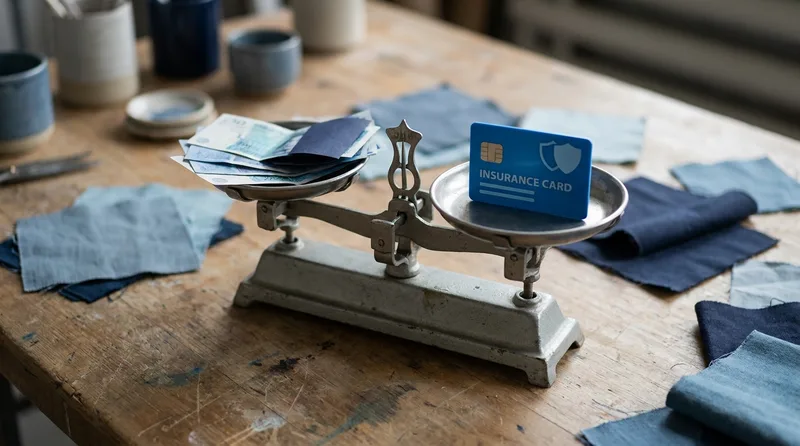
Negative reimbursement is genuinely common at a typical independent pharmacy. It affects a meaningful share of dispensed prescriptions and creates real financial pressure that cash pricing can sometimes help offset directly at the point of sale.
Drug Topics has reported that between 15% and 20% of the prescriptions a typical independent retail pharmacy dispenses represent a negative reimbursement. This means the pharmacy loses money on the transaction after accounting for true acquisition cost. A pharmacist facing this on a cheap generic sometimes has more room to offer a favorable cash price than to accept an unprofitable insurance-processed claim. That is exactly the calculation optimized cash pricing tools are built to make quickly and consistently across your entire formulary.
The clearest sign is a claim where the insurance payment does not cover your acquisition cost plus a reasonable dispensing fee, even before factoring in staff time. Most pharmacy management systems flag this at the point of sale if margin alerts are enabled. Reviewing these flagged fills weekly, rather than only noticing them at month-end reconciliation, gives staff a chance to offer the cash alternative in the moment instead of after the loss has already happened.
High-deductible health plans matter enormously for cash pricing. Patients enrolled in them often pay full price out of pocket anyway until their deductible is met. That makes a transparent cash price directly competitive with, or better than, their insurance-processed cost for much of the year.
Pharmacy Times has covered how the rise of high-deductible plans has created a growing population of effectively cash-paying customers, even though they technically carry insurance. This is a distinct patient segment worth recognizing at the counter. Someone with an unmet deductible is not meaningfully different from an uninsured cash patient for pricing purposes. Treating them as such, by proactively offering your best cash price, often produces a better outcome for everyone at the register.
Early in the plan year, before a deductible resets, is when this comparison matters most. If a claim comes back showing the full negotiated price applied to the deductible rather than a standard copay, that is a strong signal the patient is effectively paying cash already. Running the cash price alongside that claim takes only a few extra seconds and can meaningfully change what the patient pays that day.
Cash pricing does not make sense when a patient's insurance copay is already lower than any available cash price. It also does not make sense when paying cash would prevent a payment from counting toward their deductible or out-of-pocket maximum for the year.
Staff should never default to pushing cash pricing blindly. The comparison has to run both directions every time a patient checks out. For a patient actively working toward a deductible on a high-cost brand medication, staying on insurance may genuinely serve them better even if the immediate cash price looks appealing on paper. Training your team to check both paths and explain the tradeoff honestly protects patient trust far more than always steering toward whichever option is easiest to process at the register.
| Situation | Better Option |
|---|---|
| Insurance copay is lower than the cash price | Insurance |
| Patient is actively working toward their deductible | Insurance, even if cash looks cheaper today |
| Cheap generic, unmet deductible, or high-deductible plan | Cash, usually the better deal |
A pharmacy should track cash program success through per-transaction margin, total cash volume over time, and patient retention among cash-paying customers, rather than judging the program only by total savings offered to patients.
Most pharmacy management systems can report cash transaction data alongside standard insurance claims, so building this tracking habit does not require new software in most cases. Compare margin per cash transaction against your typical insurance-processed margin on the same drugs to confirm the program is genuinely profitable, not simply popular. A cash program that patients love but that quietly erodes margin is not a sustainable long-term strategy, however good it feels in the short term.
Is Your Cash Program Built Right?
Check each item you already have in place.
Your score: count your checks out of 5

A pharmacy should communicate cash pricing options clearly and proactively at the counter, since many patients simply do not know that a cash price might beat their insurance copay unless a staff member specifically mentions it.
Train staff to check both the insurance-processed price and the cash price before finalizing a transaction, especially for common generics. A simple, matter-of-fact mention, "this would actually be cheaper if you paid cash today," builds real trust and often surprises patients pleasantly rather than feeling like an upsell. Avoid framing cash pricing as a workaround or a secret. Present it as a normal, transparent option your pharmacy offers as a matter of course, the same way you would mention any other way to save a patient money on their visit.
Margin protection you control yourself
WSPC members get shared training, group purchasing power, and a network of independent owners solving these same challenges.
About WSPC →Cash pay pharmacy models are one of the few margin protections an independent can implement without waiting on a PBM contract renegotiation or new legislation. Use data-driven pricing rather than a flat discount, train staff to mention favorable cash prices proactively, and treat the strategy as a normal part of transparent patient care rather than a hidden workaround. As generics keep trending toward rock-bottom acquisition costs, this is likely to matter more, not less, in the years ahead. Pharmacies that build the habit now will be considerably further along than those still relying purely on insurance processing by default.
This article is general educational information for independent pharmacy owners and operators and is not legal, financial, tax, or regulatory advice. Verify current requirements and consult qualified professionals before acting. WSPC provides resources and advocacy for independent community pharmacies.
Ready to protect your margin with the right support behind you?
WSPC members get group purchasing power, shared training resources, and an active advocacy voice for independent pharmacy.
Become a Member →Have questions about your pharmacy's pricing strategy?
Contact WSPC →Sources
Written by
WSPC
Independent Pharmacy Cooperative · WSPC
WSPC is a member-owned cooperative that helps independent community pharmacies lower their cost of goods, grow revenue, and stay competitive through group purchasing, business analytics, clinical programs, and advocacy.
Was this article helpful?
A cash pay pharmacy model lets a patient pay directly for a prescription at a transparent price, often for a generic medication, instead of routing the transaction through insurance, which can sometimes add cost rather than reduce it.
Cash pay models are growing because many generic drugs have very low acquisition costs, and insurance processing on those cheap drugs increasingly adds administrative cost and spread pricing rather than genuine savings for the patient.
Yes, often significantly. Patients using a well-designed cash program can save up to 90% compared to standard pricing in some cases, according to Drug Topics, particularly on generics where a cash price beats an insurance copay.
Not necessarily. AI-optimized cash pricing tools are specifically designed to set a cash price that remains profitable for the pharmacy while still being competitive with discount cards, rather than simply undercutting margin to match a coupon.
Between 15% and 20% of prescriptions at a typical independent retail pharmacy involve negative reimbursement, according to Drug Topics, meaning a cash price can sometimes be more profitable than the insurance-processed alternative.
Both have a role. Discount cards bring in patients quickly with minimal setup, while a pharmacy's own optimized cash pricing program can protect margin better over time once volume and patient trust are established.

DIR fees explained in plain language: what they are, where they came from, and how the 2024 rule change affected independent pharmacy reimbursement.

Medication synchronization pharmacy programs improve adherence and revenue by aligning refills to one monthly visit, backed by NCPA-documented results.

Buying an independent pharmacy: how the process works, why purchasing beats starting from scratch, and the resources that make the transition easier.
WSPC gives you the buying power, the contracts, and the people to protect it.