Quick answer
Buying an independent pharmacy means acquiring an existing store with built-in cash flow from day one, unlike a startup's longer path to profitability. NCPA's Pharmacy Ownership Workshop and junior partnership programs are established resources for this transition. More than half of past workshop participants now own a pharmacy.
Buying an independent pharmacy is, for most pharmacists, a faster path to real ownership than starting one from scratch. An acquired pharmacy comes with an existing patient base, staff, and revenue already in motion, while a startup requires building all of that from zero before it ever turns a profit.
WSPC sees this question from pharmacists at every career stage, from recent graduates to experienced pharmacists ready to take the ownership step. This guide covers why buying often beats building, what resources exist to help, and what to expect from the process.
Buying an existing pharmacy usually beats starting one from scratch. A purchased store provides built-in cash flow from day one, while a startup pharmacy has a considerably longer return on invested capital timeline before it becomes profitable.
Industry consultants have made this point directly: the return on invested capital for a startup is much longer than for a purchase. If you choose a good store, you have built-in cash flow from the very first day of ownership. That head start matters enormously for financing, staffing decisions, and the personal financial risk a new owner takes on during the first several years.
| Factor | Buying an Existing Pharmacy | Starting From Scratch |
|---|---|---|
| Cash flow | In place from day one | Builds over months or years |
| Patient base & staff | Already established | Built from zero |
| Time to profitability | Immediate to short | Considerably longer ROIC |
| Physician & community ties | Inherited from the seller | Must be built over time |
| Creative control | Working within an existing setup | Build entirely to your own vision |
None of this means starting fresh is a bad option for everyone. Some pharmacists specifically want to build a pharmacy exactly to their own vision from day one. But for most owners prioritizing a faster, lower-risk path to sustainable income, an acquisition is the more common and generally more forgiving route.
Considering ownership? You don't have to figure it out alone
WSPC members get shared training and group resources built for owners at every stage of the journey.
Explore Member Resources →NCPA's Pharmacy Ownership Workshop is the most established resource for learning the buying process, described as a soup-to-nuts crash course covering everything from purchasing an existing store to opening one from the ground up.
Drug Topics has reported that more than 50% of past workshop participants now own their own pharmacy. The multiday events include attorneys, accountants, successful pharmacy owners, and transition specialists all available in one place. Bri Morris, PharmD, senior director at NCPA, has noted the workshop's goal is not to convince attendees to buy a pharmacy, but to give them the concentrated, practical training pharmacy school does not cover.
| Resource | What It Offers |
|---|---|
| NCPA Pharmacy Ownership Workshop | Multiday intensive course with attorneys, accountants, transition specialists |
| NCPA Buyer Resources | Guides on financing, contracting, and licensing timelines |
These programs exist precisely because pharmacy school does not typically cover the business mechanics of ownership. A workshop that puts attorneys, accountants, and experienced owners in the same room as a prospective buyer compresses years of trial-and-error learning into a few concentrated days.
A junior partnership allows a pharmacist to acquire a gradually increasing ownership percentage in an existing pharmacy over several years, while building the management experience and responsibility that comes with eventually taking over full ownership.
NCPA describes this structure as an ownership alternative for pharmacists who are not ready, financially or experientially, to purchase a pharmacy outright. Instead, you acquire equity incrementally while working alongside the current owner, who gradually transfers both ownership and responsibility. This path suits pharmacists who want ownership but prefer a lower-risk, staged transition rather than a single large purchase and immediate full operational responsibility.
This arrangement benefits both sides. The current owner gets a committed, invested successor rather than an outside buyer unfamiliar with the store, and the incoming partner gets time to genuinely learn the business before shouldering full financial and operational responsibility alone.
Multi-store ownership is fairly common among independent pharmacy owners. A meaningful share hold stakes in more than one pharmacy rather than operating a single location for their entire career as an owner.
According to the NCPA Digest, nearly 30% of independent community pharmacy owners have ownership in two or more pharmacies, with the average owner holding 2.1 pharmacies. For a pharmacist considering their first purchase, this is worth knowing: a first pharmacy is often not the last. Many owners use an initial purchase as the foundation for later expansion rather than a final destination.
Independent Pharmacy Ownership Split
Average multi-store owner holds 2.1 pharmacies. Source: NCPA Digest.
Thinking through your longer-term ownership ambitions, even loosely, before your first purchase can shape decisions like financing structure and location that are much harder to unwind later. A buyer who expects to stop at one store can reasonably prioritize different terms than one already thinking about a second location in three or four years.
The environment is genuinely challenging right now. Independent pharmacy closures are outpacing new openings in recent data, though this also means a meaningful number of transition-ready pharmacies are actively available to a prepared buyer.
The number of independent community pharmacies declined from 19,432 in 2023 to 18,984 by mid-2024. Independents were closing at a rate of more than one per day at points during that period, according to the NCPA Digest. Reimbursement pressure and thin margins are real factors behind this trend, not a temporary blip tied to one bad year.
19,432
Independent pharmacies, 2023
18,984
Independent pharmacies, mid-2024
1+/day
Closure rate at points in the period
Source: NCPA Digest
For a prospective buyer, this environment cuts both ways. Due diligence on a target pharmacy's finances matters more than ever, but sellers looking for a succession plan may also be more motivated than in a less pressured market. That combination can create genuine opportunity for a well-prepared buyer who does the financial homework a distressed market demands.
Pharmacists typically finance a pharmacy purchase through a combination of SBA-backed loans, pharmacy-specialized commercial lenders, and sometimes seller financing, where the outgoing owner carries part of the purchase price over time.
An existing pharmacy's demonstrated cash flow makes lending decisions considerably more straightforward for a bank than financing a startup with no operating history to evaluate. This is another concrete advantage of buying over building: a lender can underwrite against real numbers rather than projections.
Seller financing arrangements, where practical, can also ease the transition. A seller willing to carry a note has a continued financial interest in seeing the new owner succeed during the critical early months. Ask early in negotiations whether the seller is open to this structure, since it can sometimes bridge a financing gap a bank alone will not cover. Combining an SBA loan with a smaller seller note is a common structure, and it can lower the total cash a buyer needs at closing.
A buyer should thoroughly review a target pharmacy's payer mix, prescription volume trends, and reimbursement exposure before purchasing. These factors reveal whether the store's current cash flow is sustainable rather than propped up by a payer relationship or drug category at risk of disappearing.
Ask specifically about the pharmacy's dependence on any single high-volume payer, its exposure to DIR fees and PBM audit history, and whether prescription volume has been trending up or down over the past several years. A pharmacy that looks profitable today can carry hidden reimbursement risk that only becomes visible once you are the one absorbing it. Your accountant and attorney, ideally both experienced specifically with pharmacy transactions, should review these details before you commit to a purchase price. A seller genuinely confident in their numbers should have no issue providing detailed financials and payer mix data for your review.
Due Diligence Checklist Before You Buy
Check each item you've reviewed with the seller and your advisors.
Your score: count your checks out of 5
A prospective buyer should build relationships with a pharmacy-specialized lender, an accountant experienced in pharmacy finances, and an attorney familiar with pharmacy transitions well before actively pursuing a specific purchase.
Industry consultants recommend seeking out banks that specialize in pharmacy lending, since general small business lenders often do not understand the specific cash flow patterns and inventory financing needs of a pharmacy. The same applies to accounting and legal counsel. Specialty groups that work exclusively with pharmacies bring experience general practitioners in these fields typically lack.
Your wholesaler is also a resource here, since most maintain transition teams and checklists built specifically for pharmacy ownership changes. Reaching out to these specialized professionals months before you expect to close a deal, rather than scrambling once an opportunity appears, gives you a real advantage when it is time to move quickly.
Ownership is easier with the right network behind you
WSPC members get shared training, group purchasing power, and a network of independent owners who have made this same transition.
About WSPC →Buying an independent pharmacy is a genuinely well-supported path, with established workshops, financing specialists, and transition structures like junior partnerships built specifically for this journey. Start by building your professional network before you need it, and seriously evaluate whether buying versus starting fits your situation. Lean on the resources NCPA and others have built over decades of helping pharmacists make exactly this transition successfully.
This article is general educational information for independent pharmacy owners and operators and is not legal, financial, tax, or regulatory advice. Verify current requirements and consult qualified professionals before acting. WSPC provides resources and advocacy for independent community pharmacies.
Ready to grow your pharmacy with the right support behind you?
WSPC members get group purchasing power, shared training resources, and an active advocacy voice for independent pharmacy.
Become a Member →Have questions about pharmacy ownership?
Contact WSPC →Sources
Written by
WSPC
Independent Pharmacy Cooperative · WSPC
WSPC is a member-owned cooperative that helps independent community pharmacies lower their cost of goods, grow revenue, and stay competitive through group purchasing, business analytics, clinical programs, and advocacy.
Was this article helpful?
Buying an existing pharmacy generally offers a shorter path to profitability, since a purchased store comes with built-in cash flow from day one, while a startup pharmacy has a much longer return on invested capital timeline.
A junior partnership allows a pharmacist to acquire a gradually increasing ownership percentage in an existing pharmacy over several years, while building the management experience and responsibility needed to eventually take over full ownership.
NCPA's Pharmacy Ownership Workshop offers an intensive, multiday course covering the practical steps of buying or opening a pharmacy, with attorneys, accountants, and transition specialists available as part of the program.
A banking relationship with a lender that specializes in pharmacy lending, an accountant experienced with pharmacy-specific finances, and an attorney familiar with pharmacy transitions are the core relationships worth building before starting the process.
Nearly 30% of independent community pharmacy owners have ownership in two or more pharmacies, with the average owner holding 2.1 pharmacies, according to NCPA Digest data, suggesting multi-store ownership is a common growth path.
The environment is genuinely challenging, with independent pharmacies closing at a rate of more than one per day at points in recent years, but this also means many transition-ready pharmacies are actively seeking new owners.

DIR fees explained in plain language: what they are, where they came from, and how the 2024 rule change affected independent pharmacy reimbursement.
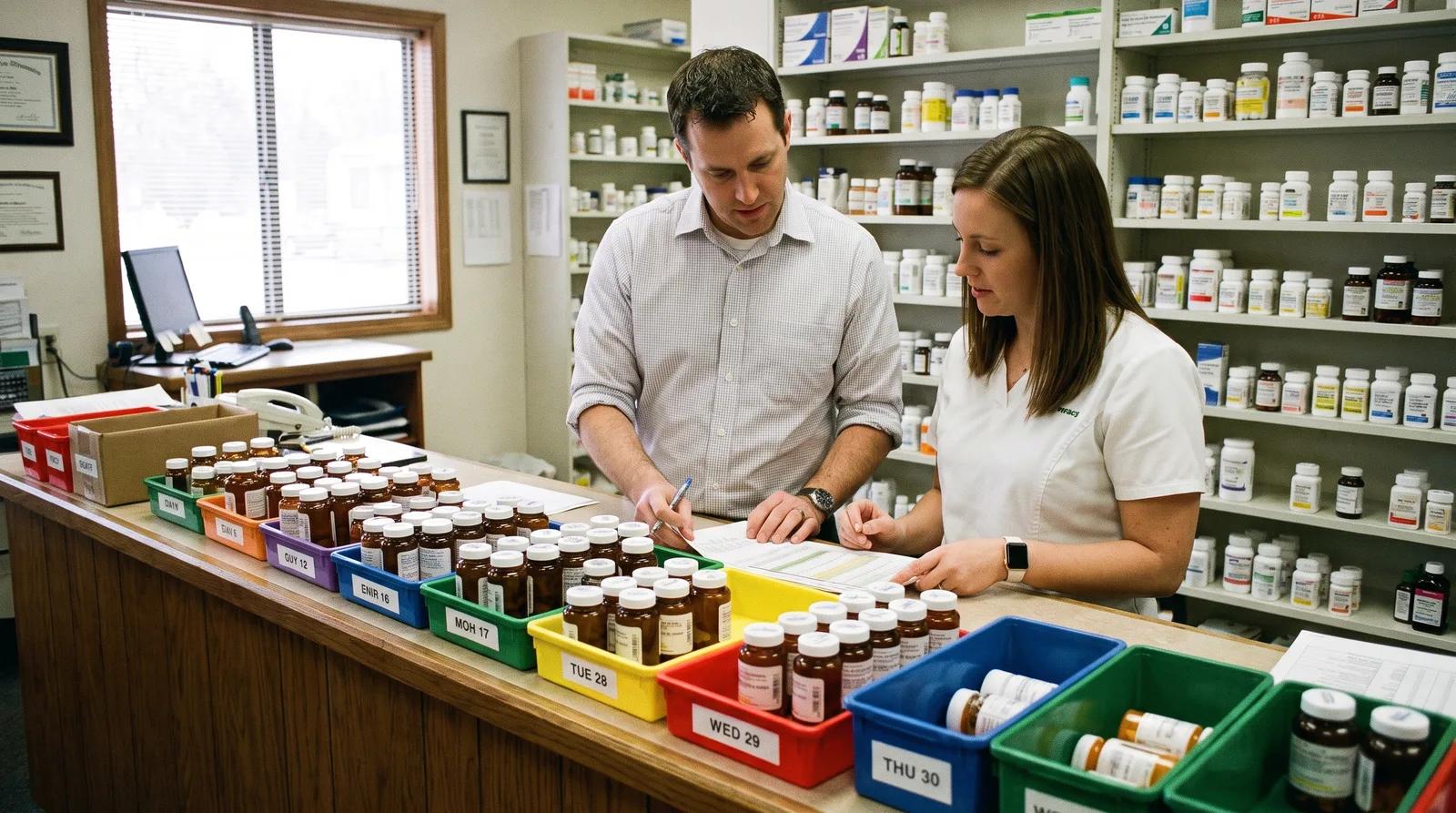
Medication synchronization pharmacy programs improve adherence and revenue by aligning refills to one monthly visit, backed by NCPA-documented results.

Cash pay pharmacy models are growing fast as generics trend toward penny-drug pricing. Here is how independent pharmacies can build one profitably.
WSPC gives you the buying power, the contracts, and the people to protect it.